News, How To's & Offers

Sign up to receive occasional emails from SDIX. We strive to deliver valuable information and savings to you.

Contact Us

Do you have questions? Want to place an order?

Bookmark and Share

Hybridoma Genomic Antibody Development

SDIX’s Genomic Antibody Technology™ can be used to generate mouse monoclonal antibodies. Unlike conventional immunization techniques,  Genomic Antibody Technology™ eliminates the need for peptide or protein antigen. Your protein amino acid sequence is analyzed for optimal antigen selection to fit your needs.

All work is scheduled on predictable timelines. All activities requiring your attention such as project review appointment, sample ship dates, and product ship dates are scheduled at the beginning of the project. To determine if ELISA-positive monoclonal antibodies work in your applications, samples of candidate hybridomas are sent to your laboratory for further evaluation. Using data generated in our laboratories and data generated in your laboratories, hybridomas secreting useful hybridomas are identified.


Genomic Antibody Technology™ (GAT)

Using this proprietary technology, immunization of mice for the development of monoclonal antibodies can begin when the sequence of the protein antigen is known.

  • You may have determined the sequence in your laboratory or you may have taken the sequence from public sources. The physical peptide or protein antigen is not required.
  • You provide only the protein sequence information of the protein antigen.
  • We build a plasmid containing sequence information from your protein and transfer the plasmid into the host animals.
  • The immunogen is expressed in vivo where it is immediately recognized by the immune system.
  • Pre-immune and immune sera are evaluated by SDIX using protein we express in the laboratory.
  • Data from screening of sera and hybridoma culture supernatant as well as samples of each are transferred to you for further evaluation.

Phase I: Immunization

TASKS:

Receipt of target protein sequence by email or through our website. Discuss desired use of antibodies in your laboratories. Discuss desired antibody performance characteristics. Up to 2 hours of discussion with our scientific staff is included.

Immunization. Fifteen mice are immunized using Genomic Antibody Technology™.

Sera Screening. Sera are collected at the end of the immunization protocol. The sera are tested at SDIX by ELISA using antigen generated by SDIX. The sera and the data generated at SDIX are sent to the customer for evaluation and review.

Project Review. After you have reviewed SDIX’s data and after you have evaluated the sera in your laboratories, the project status is discussed with you.

PHASE I TIMING: 82 days (~12 weeks).


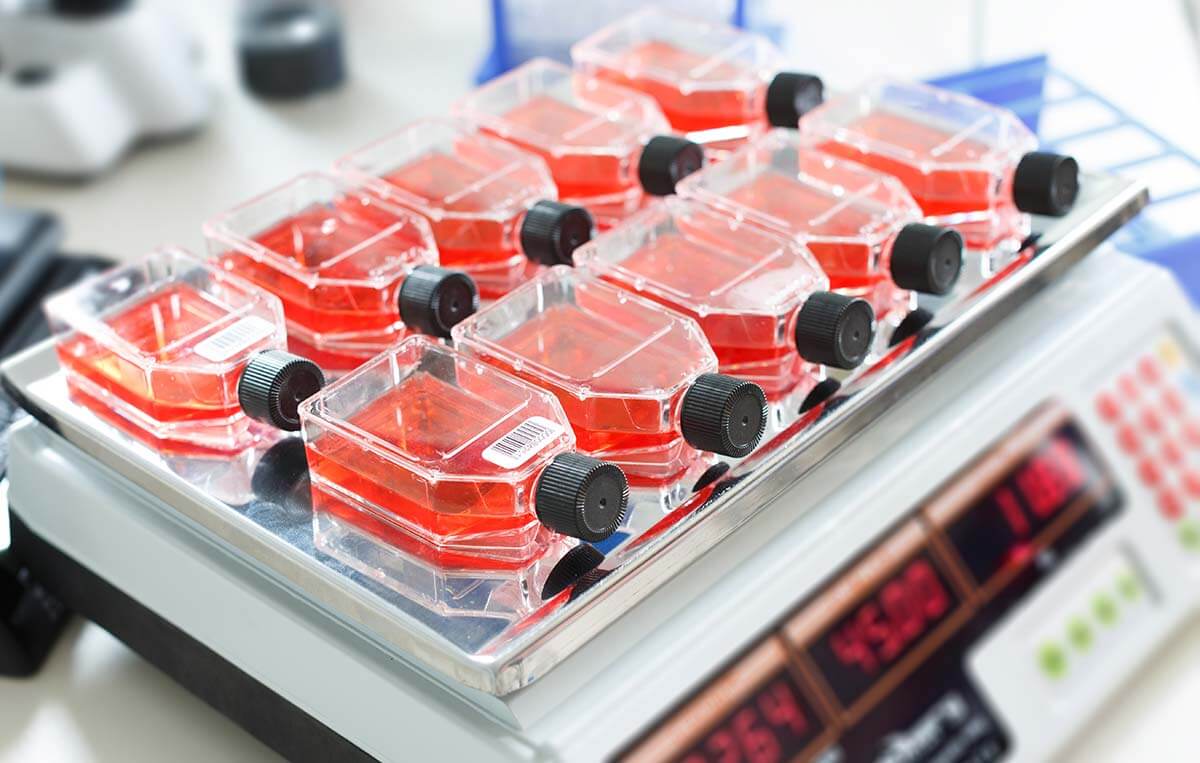
Phase II: Cell Fusion, Screening, Cloning, Freezing

TASKS:

Select Mice for Fusion. Using data generated by SDIX and data generated in your laboratories, three mice are identified for fusion with myeloma cell line P3X63Ag8.653.

Monoclonal Antibody Screening. After fusion, culture supernatants are screened by ELISA using antigen generated by SDIX. Up to 30 supernatant samples are sent to you for evaluation. Of these, six are selected by you for freezing.

Cloning. Of the six selected for freezing, three are selected by you for limiting dilution cloning to insure monoclonality. A five vial freeze is made of the six selected and a ten vial freeze is made of each subclone selected.

Freezing and Cloning. Positive hybridomas are cloned and cryopreserved. Cryopreserved cell lines are dispersed at your direction.

Storage or Shipment. At your direction, cryopreserved hybridomas and clones are stored at SDIX for one year free of charge or shipped to you.

Antibody Production. The cloned hybridoma cell lines can be used to make purified antibody by choosing from SDIX’s production and purification options (not included in this phase).

PHASE II TIMING: 87 days (~12 weeks) from fusion to shipment of storage/shipment of clones.

TOTAL HYBRIDOMA DEVELOPMENT TIMING: 169 days (~24 weeks).


Additional Services:

Phase III - R&D Small-scale Production (in vivo or in vitro) and Purification A 10 mouse ascites run with purification (5 weeks) or 3.0 L roller bottle run with Protein A purification (3 weeks); using a subclone developed during Phase II Hybridoma Development.

Additional supernatant from PII fusion candidates 

Additional parental from PII supernatants

Additional subclone of a PII parental In Vivo and In Vitro

Production Monoclonal Purification Services

Conjugation and Fragmentation Services

Cell Banking Services and Storage

Hybridoma Development is also available using traditional protein or peptide immunization.

Hybridoma development is performed as fee-for-service.

The client exclusively owns the monoclonal antibodies and hybridoma cell lines developed during the project.

For research use only.

What is GAT?

Learn more about our Genomic Antibody Technology® :

  • Save up to 50% of your antibody development costs
  • Increase assay success rates
  • No antigen to make or ship
  • Agility in antigen strategy via bioinformatic analysis
  • Native conformation of antigen expressed in vivo ensures structural fidelity